Vessel schedule decision timing, explained.
A working library for U.S. exporters and drayage providers planning against schedules that move inside the planning horizon. Definitions, operational guides, and the publications that turn pattern into decision.
Foundations
The vocabulary the rest of the library uses. Start here if you are new to vessel schedule operations.
What is ERD?
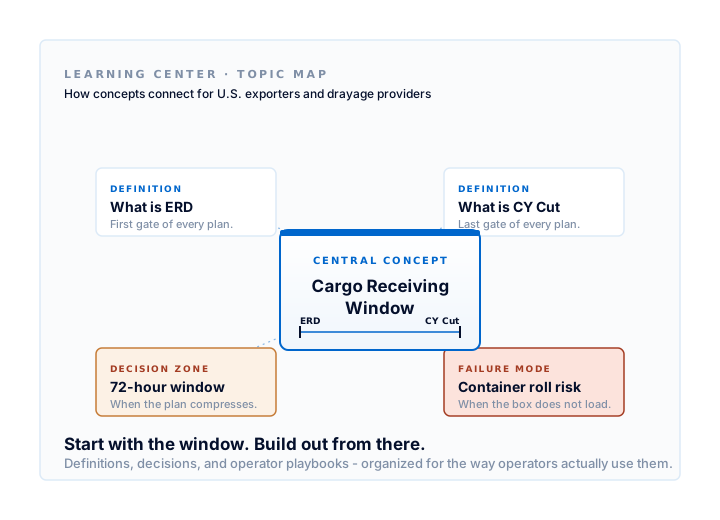
Earliest Receiving Date - the date a terminal will accept your loaded container. The first gate of every export plan.
DEFINITIONWhat is CY Cut?
Container Yard Cut-Off - the latest time a terminal will accept your container for the sailing. The last gate of every export plan.
DEFINITIONThe cargo receiving window
The window between ERD and CY Cut. Where dropoff, drayage, and rail commitments are priced. The shape that decides whether a plan holds.
COMPARISONERD vs CY Cut
Two dates, two failure modes. When they move together, the window stays usable. When they move apart, the plan changes shape.
Why schedules move
The mechanics behind the volatility operators see every day.
Why ERDs change
Vessel position, terminal labor, weather, paired ERD-CY Cut churn. The reasons schedules move and the patterns that repeat.
PLAYBOOKPlanning in volatility
Operating principles for planners. When to commit, when to hold, when to replan. Built around what the schedule is actually doing.
Operational decisions
The moments where the schedule shape changes the operational call.
72 hours before ERD
The compression zone where late-stage revisions usually arrive. What to monitor. What to commit. What to hold until the window settles.
DRAYAGE DISPATCHSafe-to-Gate timing
The dispatch decision for drayage providers. When the ERD is firm enough to send the truck, and what to do when it is not.
Risk and conflicts
What goes wrong when schedule signals disagree with operational reality.
Carrier vs terminal conflicts
The same ERD, two sources, two answers. How to read which one the operator should plan against. Which terminal data wins, when, and why.
FAILURE MODEContainer roll risk
When your container does not load on the planned vessel. The signals that arrive before a roll, and how to position for the next sailing.
By role
Two operator paths. Same schedule, different decisions, different language.
Plan before the cargo receiving window collapses.
The exporter view. How to commit container dropoff against a window that is still moving. How to know when planning is no longer working against the schedule it was built on.
Open the exporter playbook -> FOR DRAYAGEDispatch against a schedule that holds.
The drayage view. How to know whether the ERD that triggered the appointment is still real. When to dispatch, when to hold, when to reroute.
Open the drayage playbook ->Insight library
Definitions get you the vocabulary. The publications show the data behind it.
The Loaded Box
Three publications, one progression. DTB Weekly detects motion. DTB Monthly diagnoses structure. VSSI Monthly measures port-level stability.
See the publication ladder -> QUARTERLY INDEXTerminal Volatility Index
Quarterly stability rankings across U.S. container terminals. Methodology-locked, peer-review-grade, with timestamped snapshots retained for dispute defense.
View the latest TVI -> ARTICLESBlog
Operational essays, industry analysis, and case-by-case explanation of the patterns behind the data. Updated regularly.
Read the blog ->If a definition led you here, the next step is a conversation.
If your team is wrestling with a specific schedule pattern - mid-horizon revisions, repeated rolls, terminal-vs-carrier disagreements - we are happy to walk through the specifics.

Frey Commodities
"TradeLanes gives us control over the entire load order process, in real time. I highly recommended signing up to try their new early access product."