The Instability Isn’t Random
Some terminals revise receiving windows twice as often as others.
Some compress late. Some drift early and settle. Some cluster revisions inside the final 72 hours.
Exporters feel this difference.
But until now, no one has measured it cleanly.
We have.
We call it the Terminal Volatility Index (TVI).
Not a congestion score. Not a delay metric.
A structural measure of receiving-window instability.
Today, most export teams assess terminal behavior by feel. They pattern-match from the last few sailings. They call their drayage provider. They assume what happened last month will hold this week. When it doesn’t, they absorb the cost - and adjust after the fact.
That works when instability is sporadic.
It fails when instability is structural.
Terminal Instability Is Not Evenly Distributed
Figure 1 - Terminal Volatility Distribution
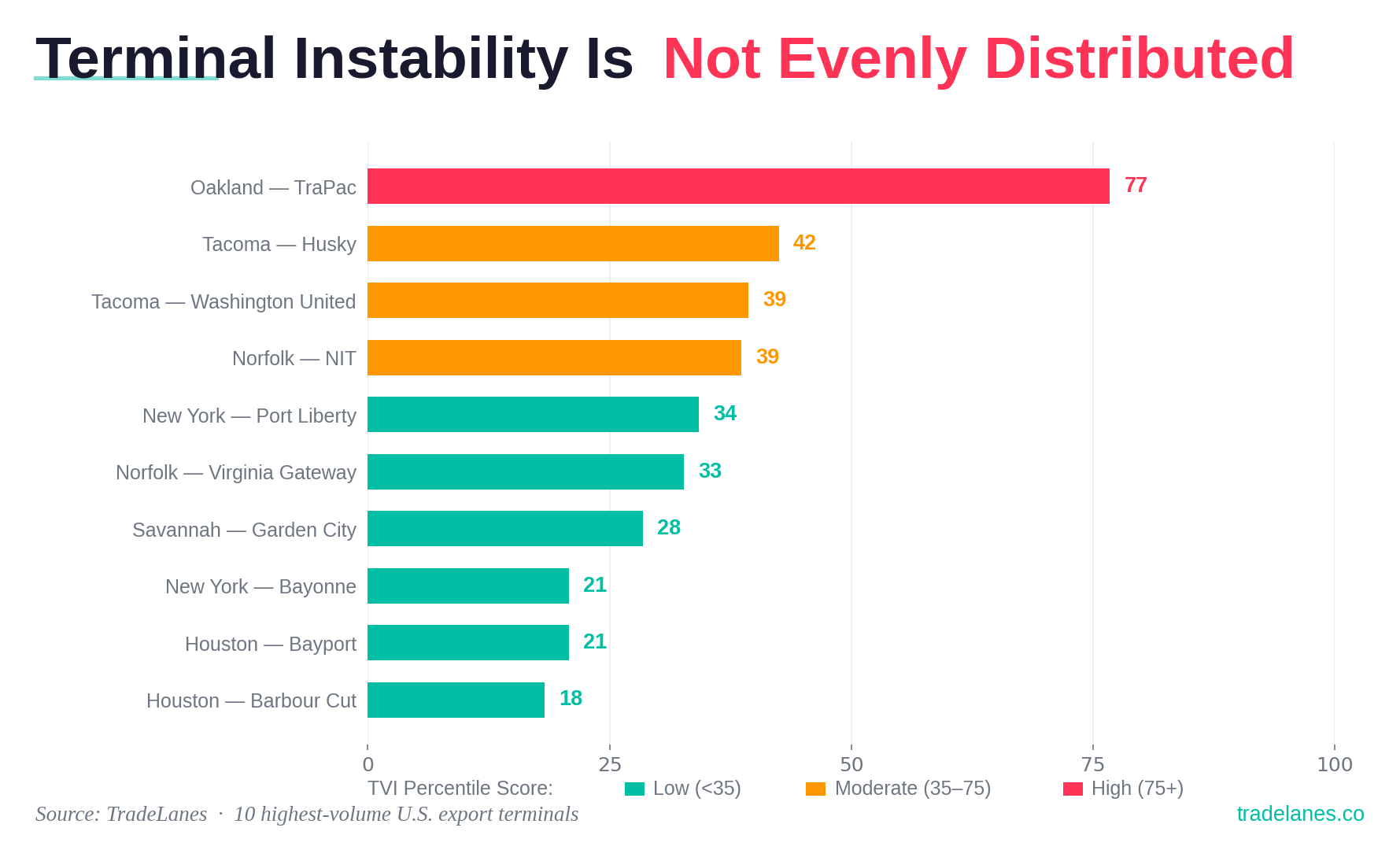
Across thousands of export sailings, instability clusters by gateway.
Certain terminals persistently rank in the upper quartile of revision entropy.
Others remain structurally stable across rolling windows.
Volatility is not evenly distributed.
That persistence suggests structure - not coincidence.
What TVI Measures
TVI does not measure outcomes.
It measures revision behavior.
Across a rolling 90-day window, it tracks:
- Late-stage change density
- Drift magnitude
- Cutoff compression frequency
- Directional pull-in bias
Volatility is multi-dimensional.
Figure 2 - The Four Structural Components of TVI
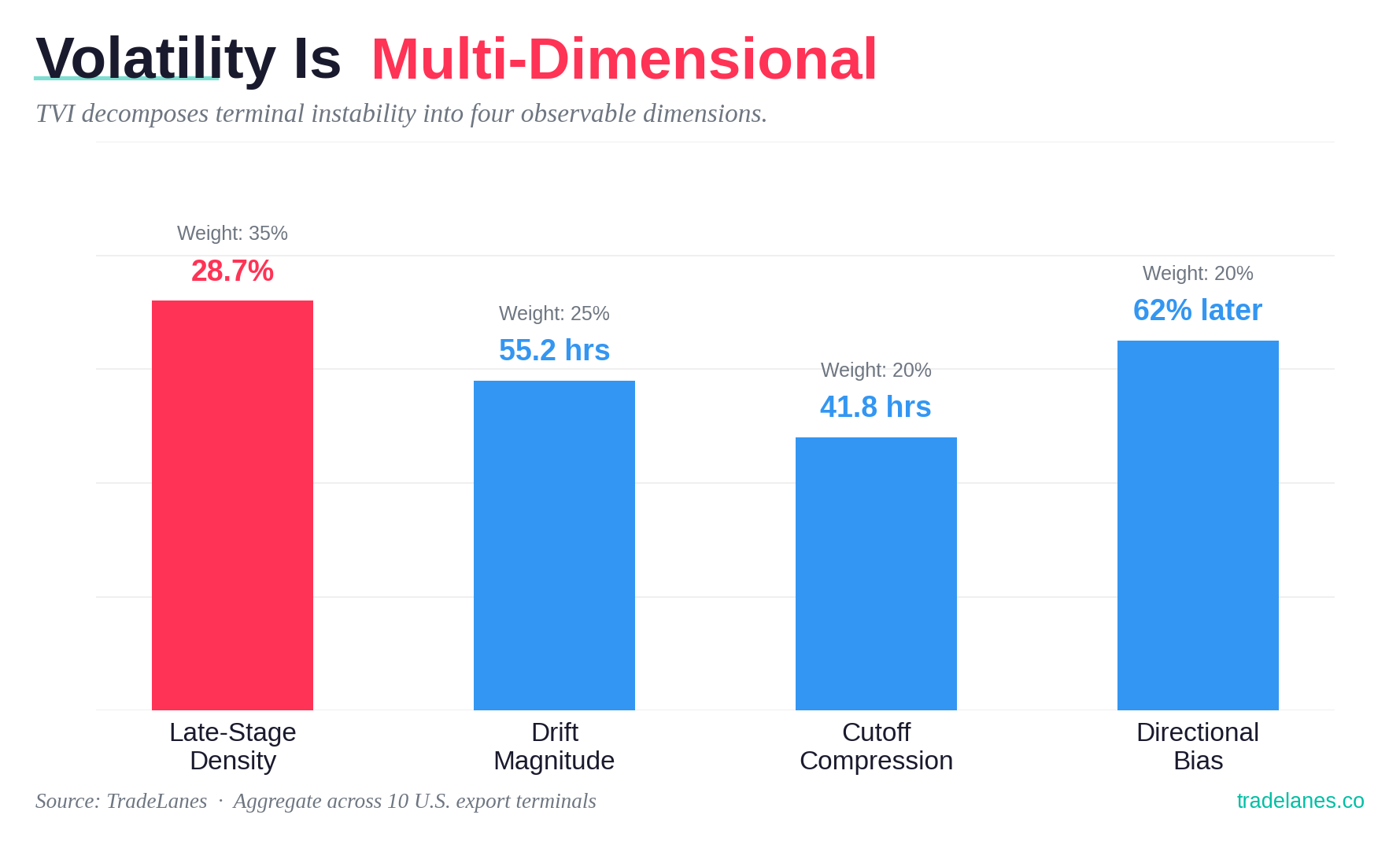
A terminal that revises often but early behaves differently than one that revises rarely but inside 72 hours.
TVI captures the structure of that behavior.
Revision Is Not Linear - It Clusters
When we mapped revision histories longitudinally, one pattern emerged:
Revisions arrive in bursts. Drift accumulates in steps. Compression events spike together.
This behaves less like noise and more like a jump process.
Figure 3 - Revision Clustering Over Time
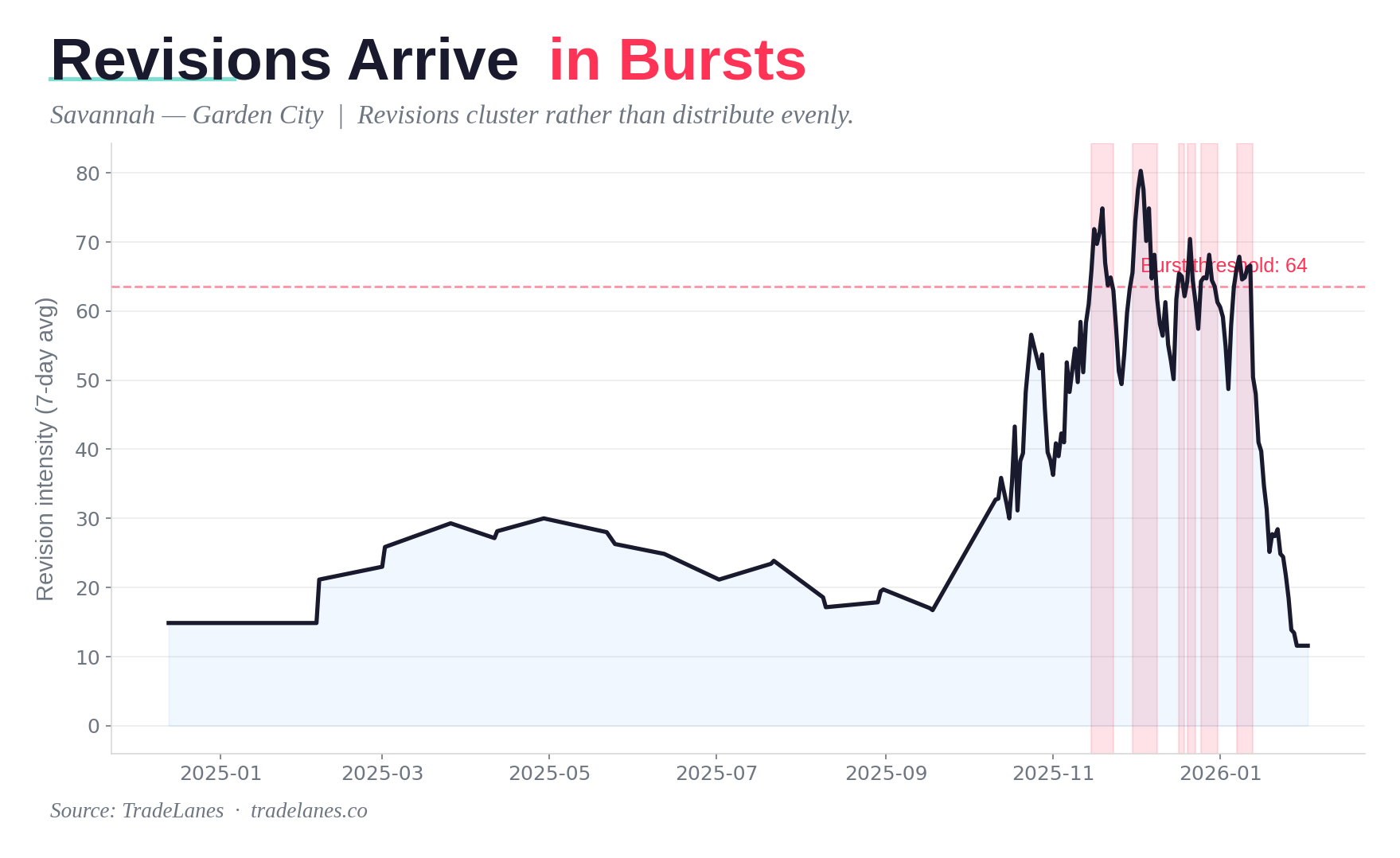
Operationally, clustered revisions compress planning time.
That’s the difference between a manageable adjustment and an irreversible loss.
Raw Counts Distort Reality
Large terminals generate more events.
That doesn’t mean they are more unstable.
So TVI normalizes behavior within the observed terminal universe.
It preserves rank. Removes traffic bias. Measures relative entropy.
Figure 4 - Raw Counts Distort. Entropy Reveals
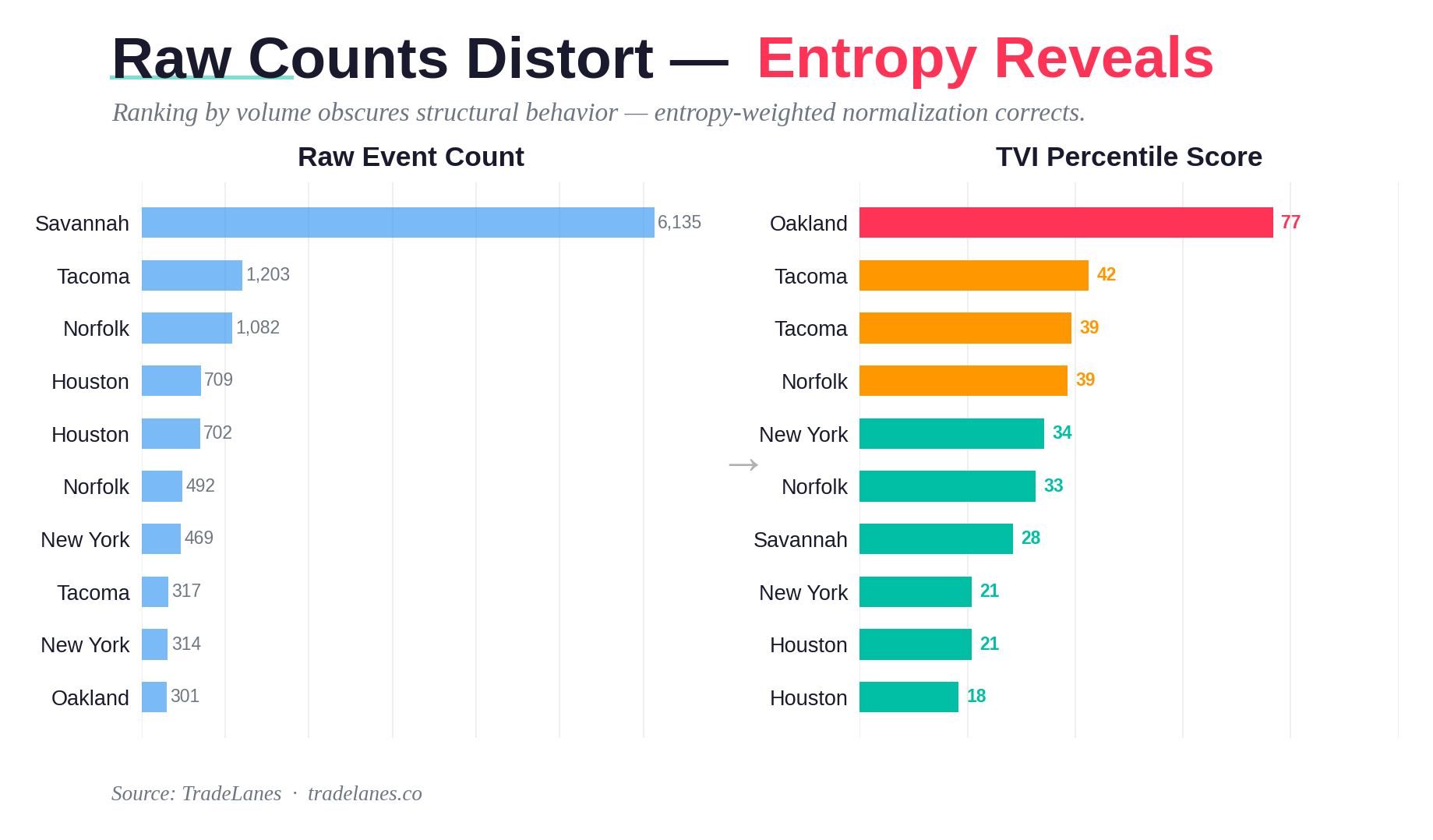
TVI is not a leaderboard.
It is a structural instability profile.
What the Data Shows
Across thousands of export schedules:
- Roughly 78% experienced at least one revision inside 72 hours of ERD
- Some terminals exceed 90%
- Drift magnitude varies materially by gateway
- Pull-in bias increases during compression regimes
But the critical finding is this:
Volatility persists in identifiable bands.
Certain terminals remain unstable even as the window rolls forward.
That persistence is what makes governance possible.
Volatility Regimes Shift Before Outcomes Do
When plotted over time, TVI reveals:
- Transitional periods
- Sharp spikes
- Clustering during broader network stress
Figure 5 - 90-Day Rolling TVI Trend
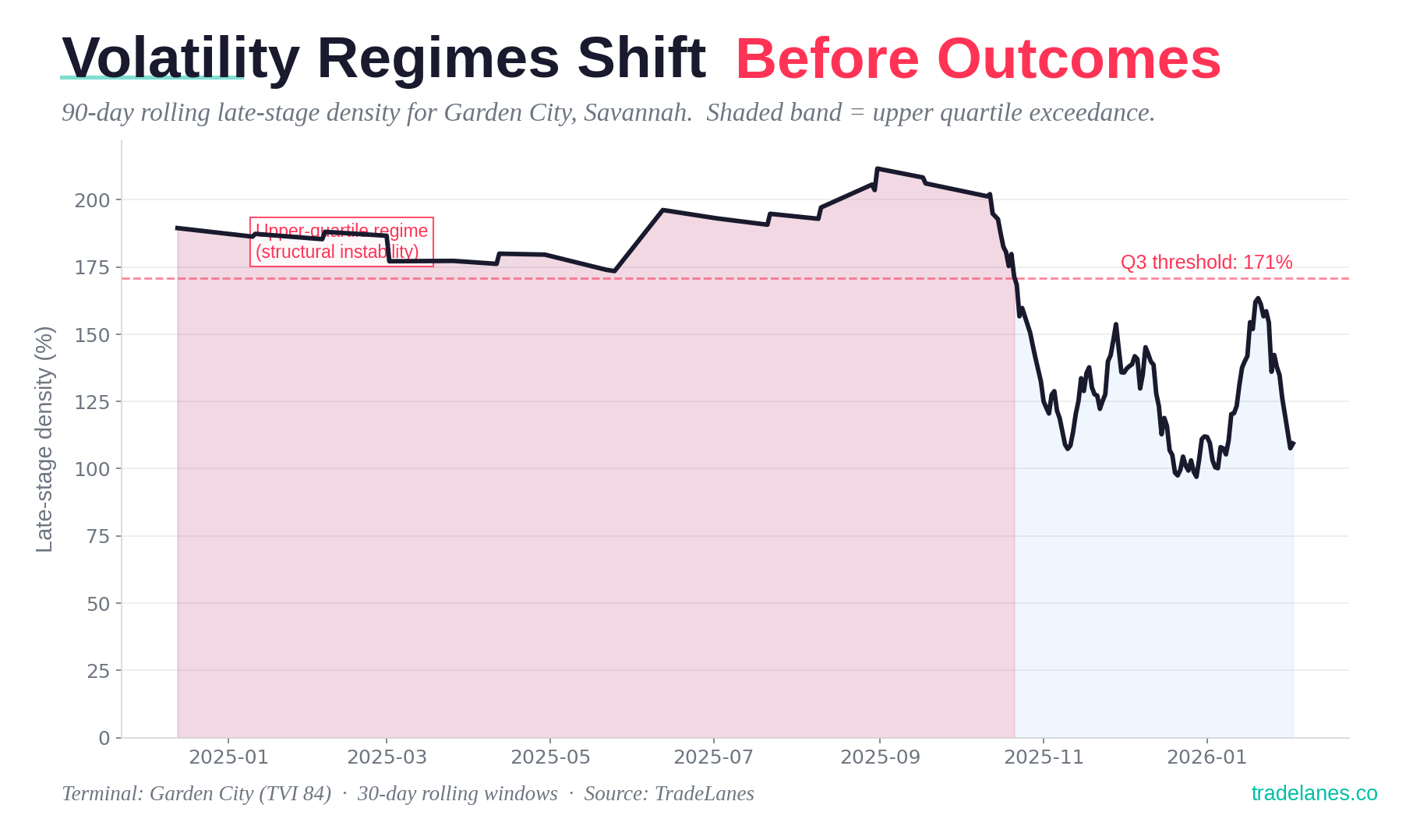
In several observed instances, TVI shifted before roll rates and cost deltas followed.
Execution instability tends to surface structurally before it surfaces financially.
That is a meaningful planning advantage.
Validation Against Outcomes
When compared against:
- Roll frequency
- Late-stage compression
- Buffer expansion behavior
Higher TVI bands align materially with elevated execution friction.
Figure 6 - Structural Volatility Predicts Execution Risk
TVI is not an outcome KPI.
It is an upstream instability signal.
Upstream instability is often what produces downstream cost.
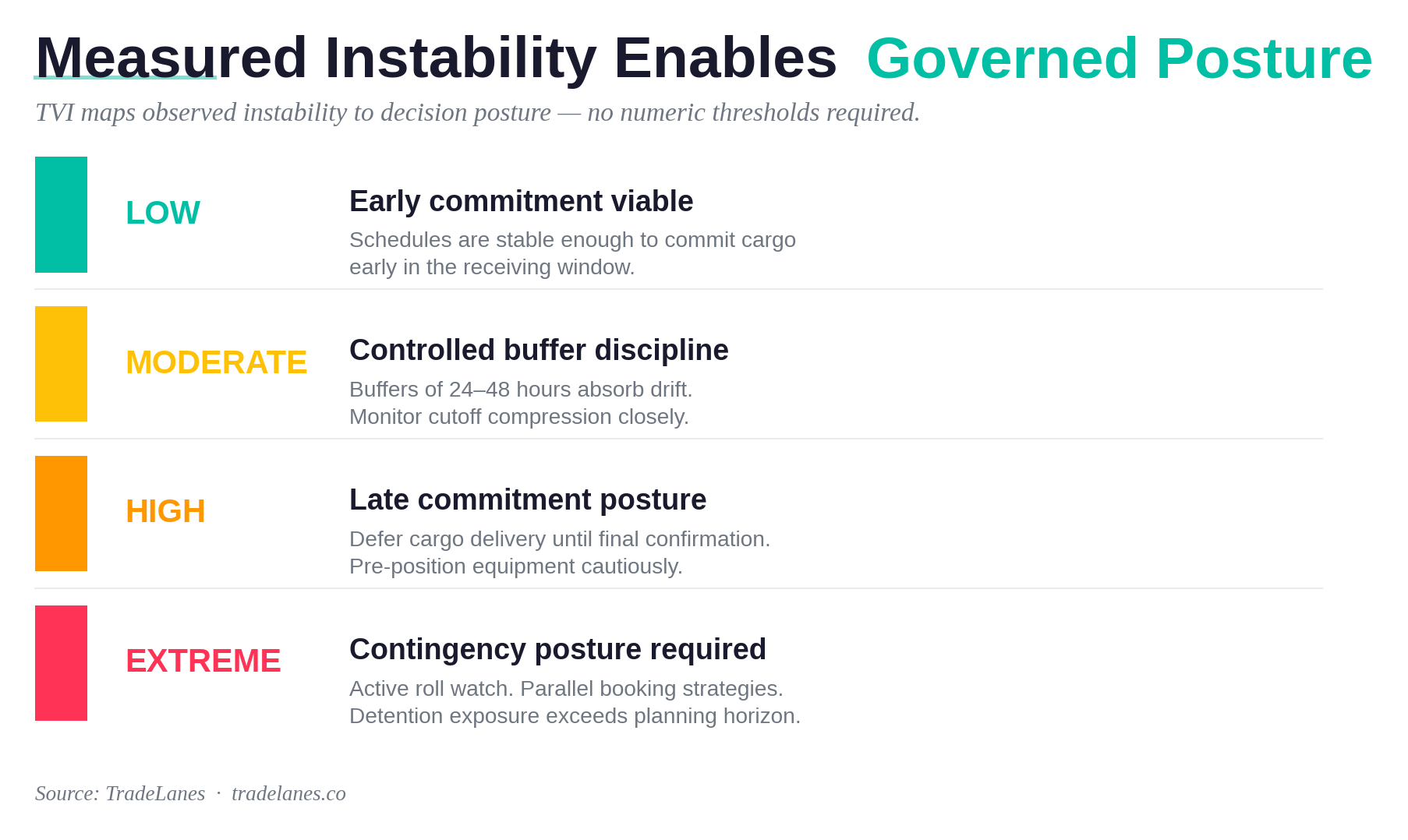
Measured Instability Enables Governed Posture
TVI is not a performance grade.
It is a planning input.
As structural entropy rises, required posture shifts proportionally.
Figure 7 - Measured Instability Enables Governed Posture
Low bands permit earlier commitment.
High bands require later commitment discipline.
Extreme bands require contingency posture.
This is corridor-level governance.
Not shipment-level reaction.
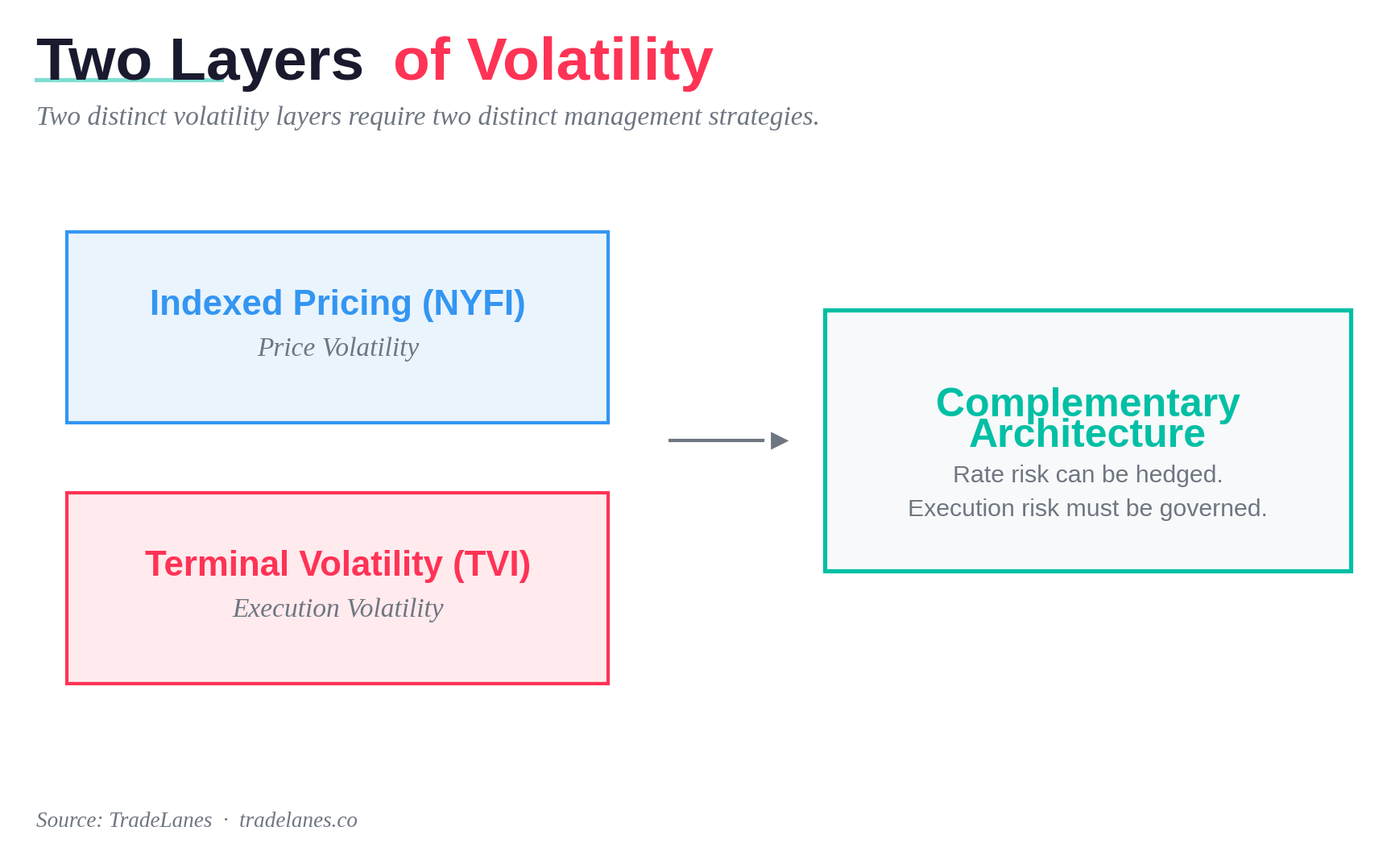
Two Layers of Volatility
Freight pricing has become indexed.
Execution volatility has not.
Figure 8 - Layered Volatility Architecture

Indexed pricing governs directional rate movement.
TVI governs execution instability.
They are orthogonal.
Together they create complementary architecture.
From Measurement to Governed Response
When instability is measurable:
It can be written into posture. Posture can be written into clauses. Clauses can activate automatically.
Not as penalties.
As predefined volatility responses.
TVI is the measurement layer that makes that symmetry possible.
Closing
Execution volatility has always existed.
Now it can be measured structurally.
Measured instability becomes governable.
Governable instability becomes contractual.
TVI is not noise reduction.
It is execution discipline - formalized.




Leave a Comment